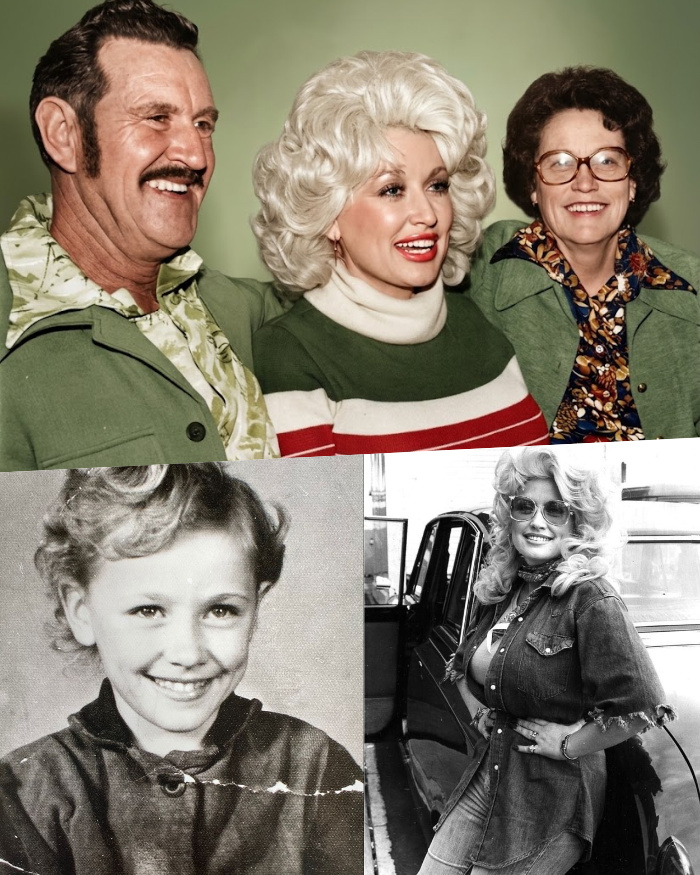
AT TEN YEARS OLD, DOLLY PARTON WAS EARNING HER OWN MONEY — TURNING EARLY RADIO CHECKS INTO FLOUR AND LARD FOR A STRUGGLING APPALACHIAN CABIN.
Long before global recognition, stadium tours, or the Grand Ole Opry, Dolly Parton’s singing voice was treated inside her family home not as a path to glamour, but as a practical tool for survival. Growing up in a rustic, two-room cabin nestled along the Little Pigeon River in Locust Ridge, Tennessee, resources were desperately scarce. Her parents, Robert Lee and Avie Lee Parton, labored tirelessly to shelter and feed twelve children on an unforgiving sharecropper’s plot.
Recognizing her uncommon musical ear and raw confidence, her maternal uncle, Bill Owens, stepped in to help guide her talent beyond the front porch. Owens, a songwriter and musician himself, invested in an old car and took young Dolly under his wing, driving her down winding two-lane mountain passes into Knoxville. He began knocking on broadcast station doors, determined to get his niece heard by an audience outside Sevier County.
Those weekly trips bore fruit when local grocery magnate Cas Walker offered the ten-year-old a recurring live slot on his popular regional radio and television broadcasts on WIVK. Holding an acoustic guitar nearly as large as herself, Dolly stood steadily before heavy studio microphones, singing traditional mountain tunes, early country arrangements, and original lines for thousands of listeners she could not see.
The compensation arrived as a few crumpled bills tucked inside plain paper envelopes. For a child, that cash might have bought soda, ribbons, or penny candy at a general store. Dolly, however, wrapped her fingers tightly around every dollar on the bus and car rides home through the foothills. Upon stepping through the front door, she placed the full envelope directly into her mother’s hands.
In a household where twelve siblings shared beds and meals, that meager income carried immediate, life-sustaining weight. Her earnings bought fifty-pound sacks of flour, lard, cornmeal, and sugar, helping chip away at long-running grocery debts at local mountain stores. By the time she was twelve and thirteen, she was quietly paying for her own school clothes, purchasing notebooks and pencils, and shielding her parents from the constant dread of unpaid pantry bills.
Uncle Bill Owens remained the tireless strategist behind the scenes. Between grocery broadcasts, he helped broker a regional recording agreement with Eddie Shuler’s Goldband Records in Lake Charles, Louisiana. In 1959, at thirteen years old, she cut her very first commercial vinyl single, a buoyant rockabilly-tinged tune titled “Puppy Love,” written by Dolly and her uncle during their hours on the road.
That partnership reached its pivotal summit in the summer of 1964. The very morning after graduating from Sevier County High School—the first person in her family line to receive a high school diploma—Parton packed her clothing into cardboard boxes and climbed aboard a westbound bus directly to Nashville. Owens drove alongside the journey, continuing to co-write and pitch songs across Music Row until the industry finally began opening its executive doors.
Those exhausting round-trip drives to Knoxville and the relentless grit of live grocery broadcasts forged the iron work ethic that defined her entire career. Music was never a leisurely hobby for Dolly Parton; it was the quiet, steady labor that kept food on a mother’s table and lifted twelve children from poverty. Before the world ever learned her name, her very first stage had already served its most meaningful purpose.